
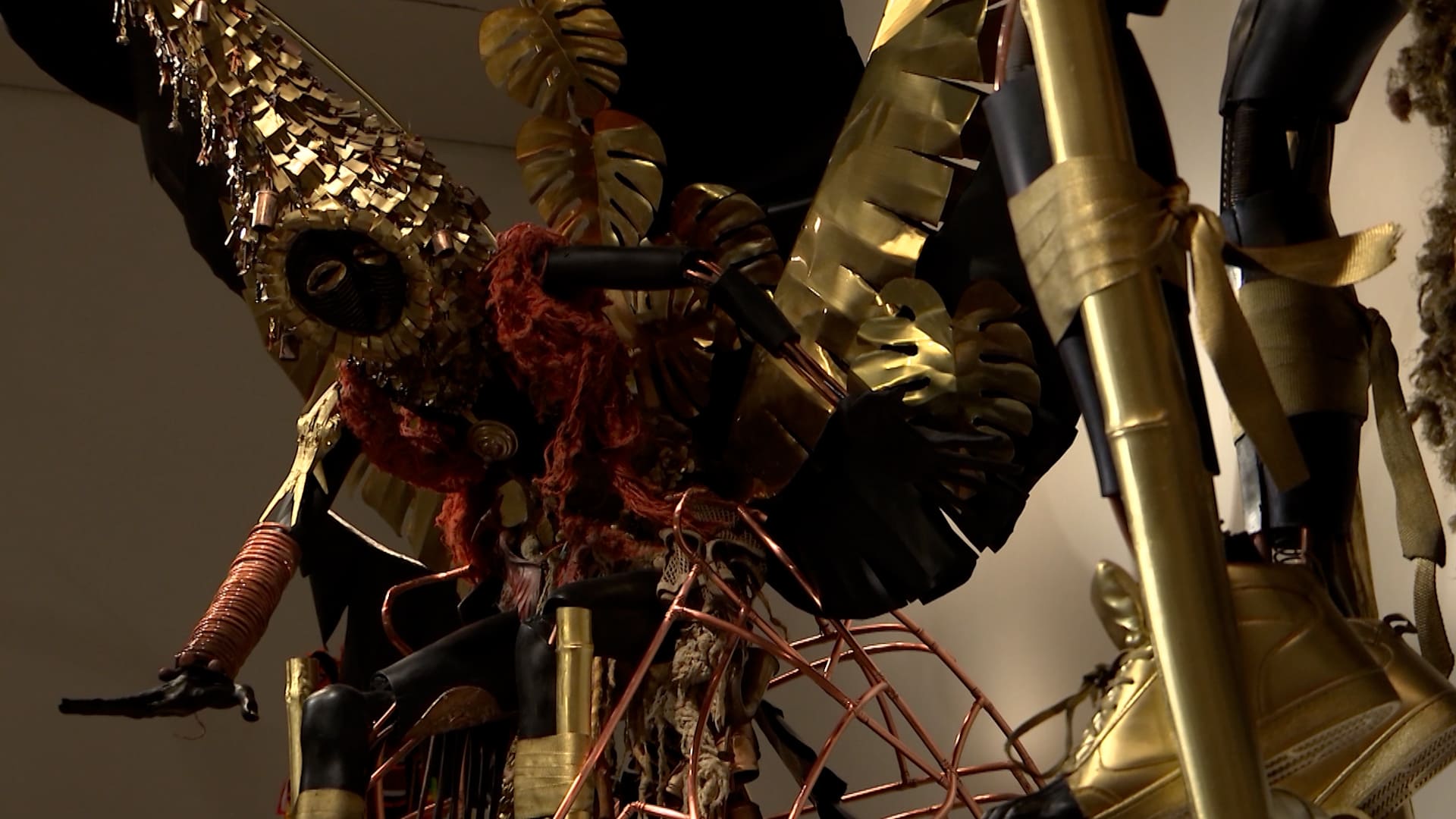
Art has the power to connect with people in deeply personal ways, creating emotions and interpretations that can differ from one viewer to another. British-Trinidadian artist Zak Ové has built his career around that idea, producing sculptures that bring together contemporary technology, African and Caribbean history, and the visual traditions of Trinidadian carnival. His work is bold and imaginative, but it is also rooted in memory, identity, and family experience.
Ové describes himself as largely self-taught, although creativity surrounded him from childhood. His father was a filmmaker and painter who introduced him to art while taking him on formative journeys across Africa and the Caribbean. Those experiences gave Ové an early understanding of different cultures and artistic traditions. Rather than learning only through formal institutions, he absorbed ideas through travel, observation, family influence, and direct contact with the communities that would later shape his work.
In the early 2000s, Ové began documenting Trinidad Carnival through film and photography. He was fascinated by the characters, costumes, rituals, and stories being performed in the streets. Over time, however, he became dissatisfied with remaining only an observer. Instead of analyzing carnival from behind a camera, he wanted to participate in its creative energy by building objects and developing his own visual language. This shift pushed him toward sculpture and allowed him to transform cultural research into physical forms.
Although Ové was born in London, his work draws heavily from Africa and the Caribbean because those places were central to his upbringing. At the age of ten, he travelled alone to Kenya to stay with family. After arriving in Malindi, he discovered that no one knew he was coming and waited for hours at a small airport holding a skateboard, surrounded by an environment completely different from home. The experience was confusing at the time, but he later understood how strongly such journeys shaped his independence and imagination.
His earliest memories of Trinidad Carnival were equally powerful. As a young child, he encountered performers dressed as Blue Devils, traditional carnival characters known for their frightening appearance and wild behavior. They grabbed him and carried him through the streets while he screamed, creating a moment of fear, excitement, and theatrical spectacle that stayed with him for decades.
Much of Ové’s art can be understood as an attempt to return to that intensity. By combining heritage, technology, sculpture, and personal memory, he creates work that does more than represent carnival. It captures the energy of transformation and invites audiences to experience culture as something alive, emotional, and constantly evolving.
