
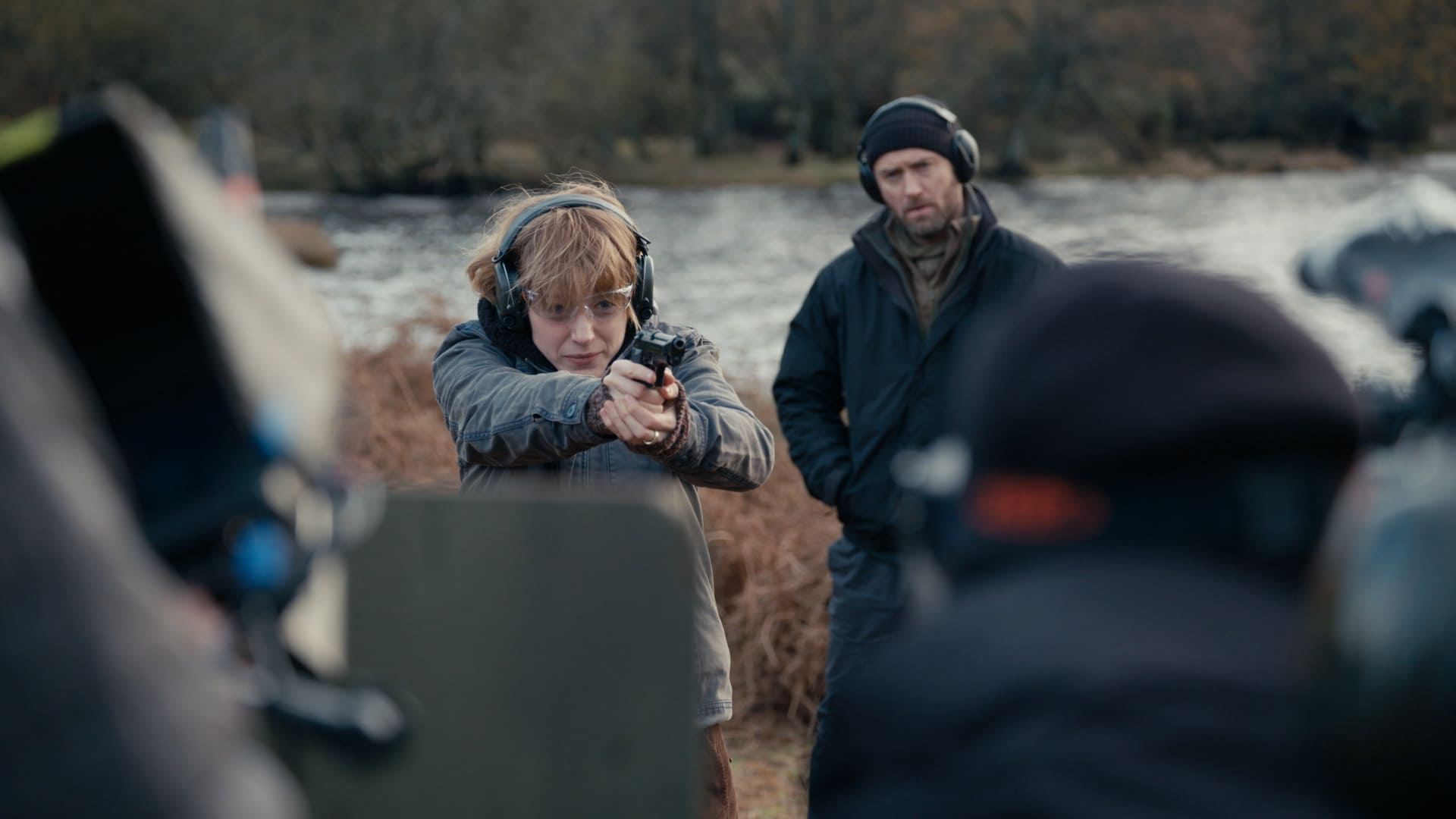
The Rhythm Section places grief at the center of an unconventional revenge story. Blake Lively stars as a woman whose life collapses after discovering that the plane crash that killed her family was not an accident. With little left to lose, she begins searching for those responsible and is pulled into a dangerous world of espionage, violence, and covert operations. Her transformation is not presented as the sudden rise of a flawless action hero, but as the difficult journey of an ordinary person forced into extraordinary circumstances.
Within the film, Lively’s character receives guidance from Jude Law, but behind the scenes, her physical preparation was shaped by stunt coordinator and fight choreographer Olivier Schneider. A former stunt performer, Schneider developed an impressive career working on major action productions including Fast & Furious 6, Taken, Spectre, and No Time to Die. His experience with large-scale action helped him design demanding sequences while keeping the movements closely connected to the film’s emotional story.
Schneider understood that the protagonist could not fight like an experienced secret agent or professional assassin. She begins as someone with limited training and no real field experience, so her movements needed to reflect fear, hesitation, desperation, and instinct. His approach was built around the belief that action should reveal character. A punch may appear simple, but its speed, purpose, and force should change depending on whether it comes from a trained killer, an athlete, or someone fighting purely to survive.
That attention to character shaped every confrontation in the film. Rather than filling the screen with polished martial arts, Schneider created fights that feel rough, close, and unpredictable. The protagonist makes mistakes, struggles to control situations, and often appears overwhelmed by the physical and psychological pressure around her. This imperfection gives the action greater tension because the audience cannot assume she will handle each threat with professional ease.
Schneider also prepared Lively for the production’s stunts, vehicle sequences, and other physically demanding scenes. A major part of that training involved learning how an inexperienced operative might respond to intense stress during a genuine mission. The result is an action performance built around vulnerability rather than invincibility. By grounding its set pieces in character and emotion, The Rhythm Section offers a different kind of thriller, one in which survival depends not on perfect technique but on determination, adaptability, and the willingness to keep moving through fear.
