
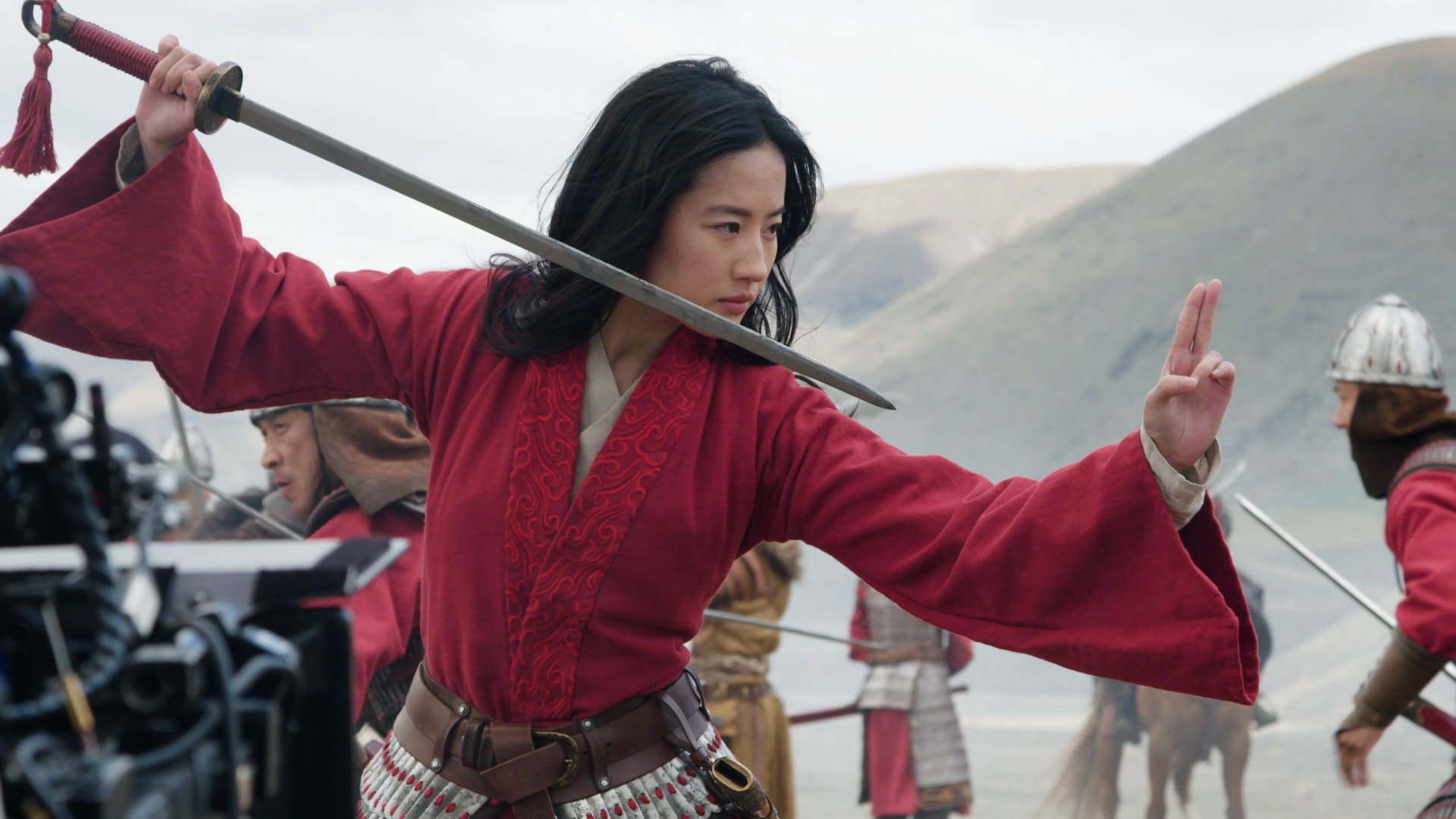
Disney’s live-action adaptation of Mulan uses costume design as a central part of its visual storytelling. Set in ancient China, the film required clothing that could communicate character, status, tradition, and emotion while still supporting large-scale action. Costume designer Bina Daigeler approached the project through extensive historical research, carefully balancing cultural inspiration with the demands of a modern fantasy epic.
Long before filming began, Daigeler assembled mood boards for the movie’s key visual ideas. These included Mulan’s matchmaker outfit, the appearance of the imperial army, and the broader color language of the film. The costume department worked closely with the production design and art teams throughout a lengthy pre-production period, allowing the visual world to develop gradually and consistently. This collaboration helped ensure that the clothing, sets, and overall atmosphere felt connected rather than designed in isolation.
Color became one of the most important tools in the process. Daigeler wanted the costumes to feel bold, fresh, and optimistic, so the team created a wide range of richly dyed fabrics in red, yellow, blue, and other striking shades. These choices were not made for visual impact alone. Research into Chinese history showed that colors could carry specific meanings and indicate social position. Yellow, for example, was traditionally associated with the emperor, while red and black also carried their own symbolic significance. Understanding these associations allowed the designers to use color deliberately throughout the film.
The production relied on a large costume workshop with dedicated textile and aging departments. Fabrics were dyed, layered, embroidered, and altered to create garments that looked distinctive on screen while still belonging to the same cinematic world. The army’s uniforms needed to appear disciplined and formidable, while ceremonial clothing demanded greater detail and elegance. Even background costumes contributed to the film’s sense of scale and helped distinguish different communities and social groups.
Practicality was especially important for Liu Yifei, who performed demanding physical scenes in the title role. Although many of Mulan’s costumes appear elaborate, they were constructed to give the actress enough freedom to run, fight, ride, and complete carefully choreographed movements. The design team therefore had to conceal modern flexibility within clothing inspired by historical forms.
Through its combination of research, craftsmanship, symbolism, and functionality, the wardrobe of Mulan does far more than decorate the cast. It reinforces the film’s themes of identity, duty, power, and transformation, helping Mulan’s journey from devoted daughter to fearless warrior unfold through every change of clothing.
