
Ryan Gosling may not resemble the traditional musclebound action hero, but that difference has become one of his greatest strengths. Across crime thrillers, science fiction, historical drama and stunt driven blockbusters, he has brought a quieter kind of intensity to action cinema. His characters often combine physical capability with vulnerability, uncertainty and emotional restraint. Rather than simply overpowering their opponents, they tend to struggle with identity, responsibility or personal relationships. That approach has helped Gosling create a distinctive place for himself within the genre.
Blade Runner 2049 offered one of the clearest examples. Gosling plays Officer K, a replicant working for the Los Angeles Police Department in a bleak future where the boundary between artificial and human life has become increasingly complicated. His performance relies heavily on restraint, allowing subtle expressions and moments of silence to reveal K’s growing questions about identity and purpose. Working with director Denis Villeneuve, cinematographer Roger Deakins and Harrison Ford, Gosling helped expand a cinematic world that had already become hugely influential.
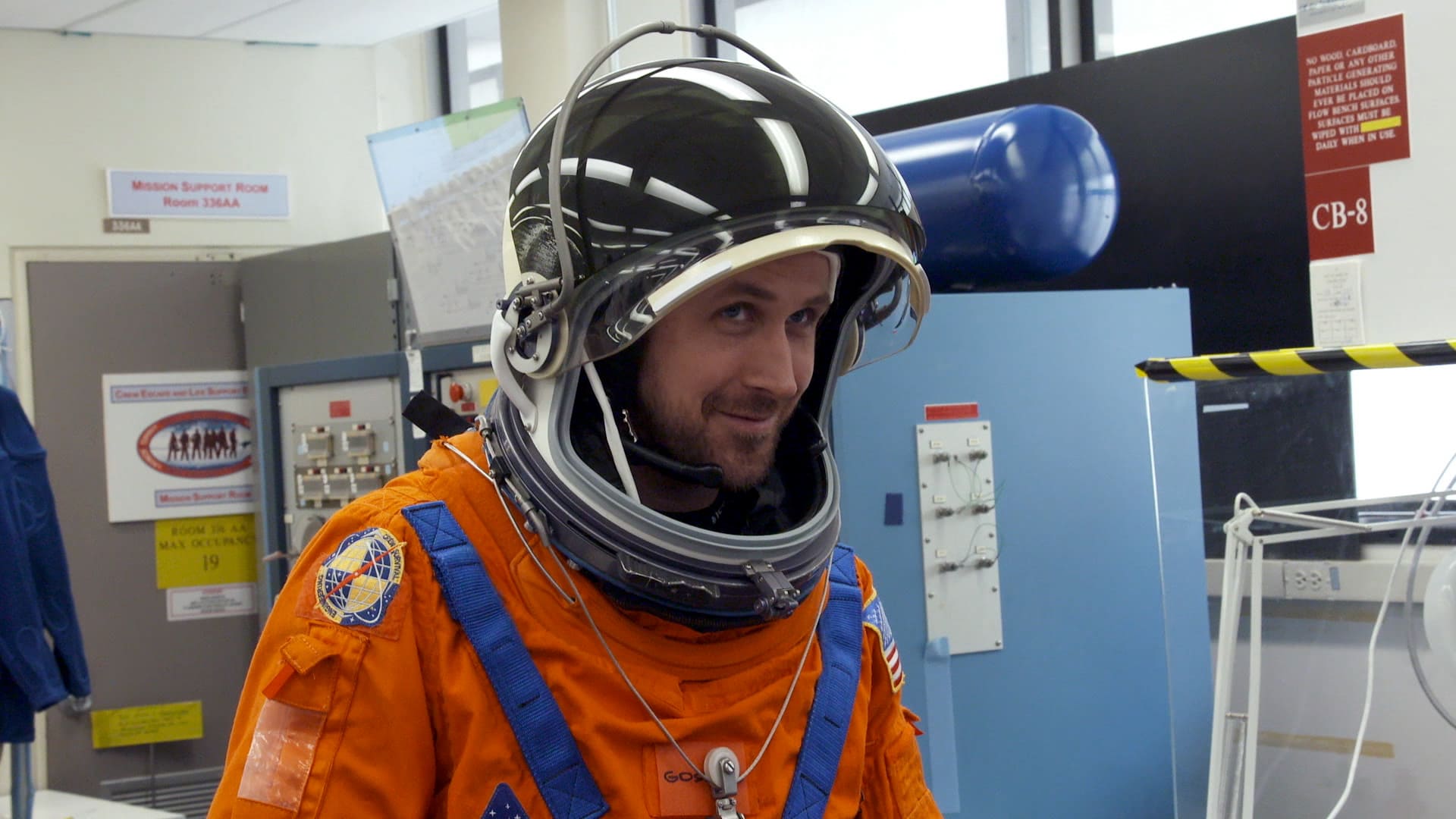
First Man presented a very different challenge. As astronaut Neil Armstrong, Gosling portrayed the man who became the first person to walk on the Moon. The film combines the danger of experimental spaceflight with a deeply personal story about grief, family and determination. Instead of turning Armstrong into a conventional heroic figure, Gosling delivered a reserved performance that reflected the astronaut’s famously private personality.
Crime stories have also given him opportunities to explore action from different angles. In Gangster Squad, he played Los Angeles police officer Jerry Wooters, part of a secret team battling organized crime in the late 1940s. Drive took restraint even further. As an unnamed Hollywood stunt driver who also works as a getaway driver, Gosling created a character who can appear almost silent and gentle before suddenly becoming dangerous.
His lighter side became essential to The Nice Guys, where he played private investigator Holland March opposite Russell Crowe. The film combined mystery and violence with physical comedy, allowing Gosling to transform panic, clumsiness and bad decisions into part of the action.
The Fall Guy brought many of these qualities together. Playing stunt performer Colt Seavers, Gosling moved between comedy, romance and large scale practical action while paying tribute to the professionals who create dangerous movie sequences behind the scenes.
What connects these roles is not a particular fighting style or superhero physique. Gosling’s action characters remain interesting because they are rarely invulnerable. They can be frightened, lonely, confused or emotionally damaged even while facing extraordinary situations.
From Drive and Blade Runner 2049 to The Fall Guy, Gosling has shown that an action star does not need to follow a familiar formula. His combination of restraint, humor and vulnerability offers something different, proving that emotional complexity can be just as important to an action hero as physical strength.
