
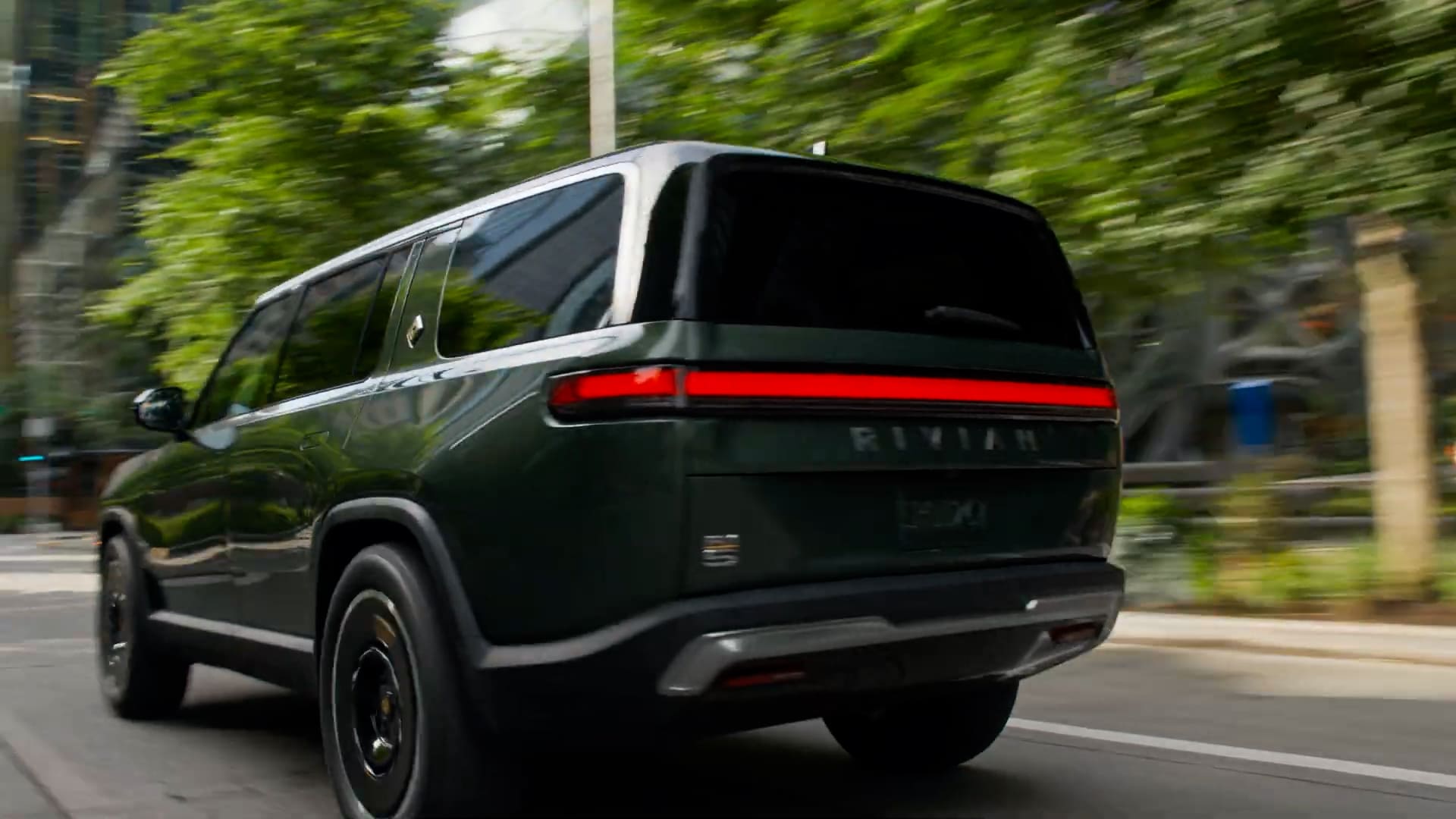
Electric vehicles are often associated with efficient city driving, but Rivian has built its identity around taking battery power somewhere more adventurous. Founded in the United States in 2009, the company spent years developing its technology before beginning customer deliveries of its first production vehicle in 2021. Rather than simply creating another electric car, Rivian focused on pickups and SUVs designed to combine everyday usability with the ability to travel well beyond paved roads.
Its first major production models established that philosophy. The R1T electric pickup and R1S SUV combine powerful electric drivetrains with spacious interiors, substantial ground clearance and technology designed for changing terrain. Depending on model and configuration, versions can travel more than 300 miles on a charge, making the vehicles suitable for longer journeys as well as daily commuting.
Practical design is another important part of Rivian’s approach. The R1T’s Gear Tunnel is one of its most recognizable features. Located between the passenger cabin and rear wheels, the storage space runs across the width of the vehicle and provides a protected area for luggage, camping supplies and outdoor equipment. Features like this reflect Rivian’s effort to design an electric pickup around how owners might actually use it during trips and outdoor activities.
The company’s ambitions extend beyond its original vehicles. Rivian has introduced plans for additional models aimed at reaching a broader range of drivers, including the midsize R2 SUV and the smaller R3 family. These vehicles are intended to bring elements of Rivian’s design and software approach into more compact packages than the R1T and R1S.
Its technology has also attracted attention from established manufacturers. Volkswagen Group and Rivian created a joint venture focused on electrical architecture and software technology. The partnership gives Volkswagen access to Rivian’s expertise while providing Rivian with additional resources to develop technology that could eventually support vehicles across both companies.
For owners, however, the appeal is often simpler. Rivian vehicles are designed to deliver the quiet acceleration and technology associated with modern EVs while retaining the utility expected from an SUV or pickup. They can handle ordinary commuting during the week and provide additional capability when the road becomes more demanding.
That combination remains central to Rivian’s identity. The company is competing in an increasingly crowded electric vehicle market, so its future will depend on manufacturing, affordability, technology and demand. But its early vehicles have already demonstrated a compelling idea, that electric mobility does not have to mean giving up the freedom associated with adventure.
