
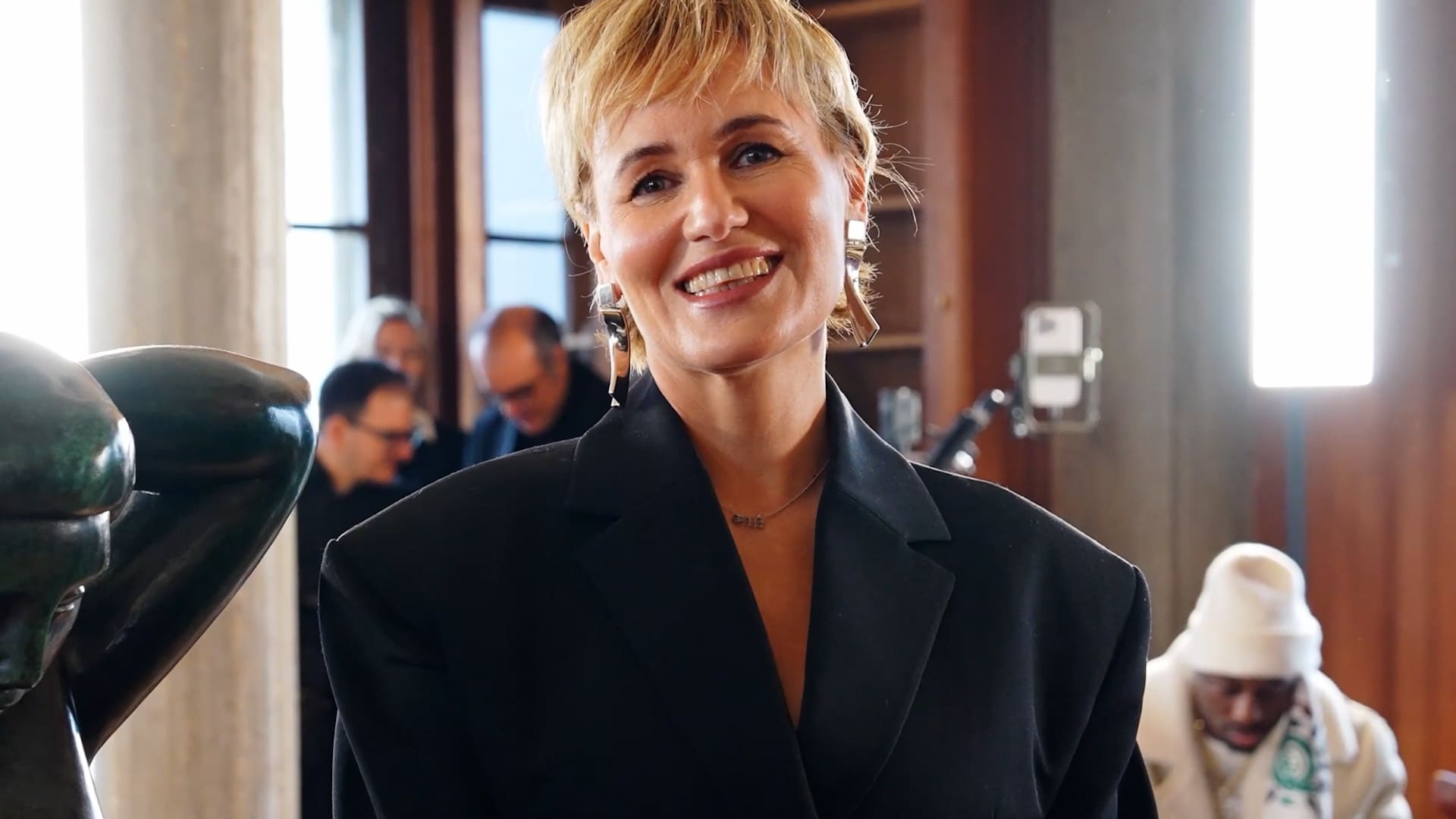
Judith Godrèche entered French cinema while she was still a teenager, beginning a relationship with the film industry that would eventually take on a very different meaning. Born in Paris, she started acting at 14 and quickly emerged as a promising young performer. At 17, she co-wrote and starred in the 1990 drama The Disenchanted, a breakthrough that brought her a César nomination. Soon afterward, she joined the jury of the Berlin International Film Festival at just 18. Over the decades that followed, Godrèche expanded her career from acting into writing, directing and producing.
Her early success placed her inside French cinema at an unusually young age. She went on to build an extensive screen career in France and internationally, but her relationship with the industry later became central to her activism. In 2017, Godrèche was among the women who publicly spoke about Harvey Weinstein amid the wave of allegations that helped accelerate the international MeToo movement. In subsequent years, she became an increasingly prominent voice in France’s discussion about sexual violence, power imbalances and protections for young performers.
Godrèche eventually began using filmmaking itself to explore those subjects. Her 2024 short Moi aussi, or Me Too, brought together stories connected with sexual and gender based violence. Featuring her daughter Tess Barthélémy, the film used a gathering of people and their experiences to move from isolation and unspoken pain toward collective expression. It was presented during the Cannes Film Festival and became another way for Godrèche to turn public testimony into creative work.
Her work as a director took another major step in 2026 with A Girl’s Story, her feature adaptation of Nobel Prize winning author Annie Ernaux’s autobiographical book Mémoire de fille. Presented in the Un Certain Regard section at Cannes, the film examines memories surrounding a formative and traumatic experience from Ernaux’s youth in 1958. Godrèche has explained that Ernaux’s writing about male dominance, memory and the desire to belong strongly connected with the questions she wanted to explore through cinema.
The film also reflects Godrèche’s concern with how difficult material is created behind the camera. She has emphasized the importance of safe working conditions and giving young performers clear protections when filming intimate or violent scenes.
That gives Godrèche’s career an unusual arc. She entered an adult industry at an exceptionally young age and later became one of the people challenging it to examine how young performers are treated. Rather than separating filmmaking from advocacy, she has increasingly brought the two together, using cinema not only to tell stories, but also to question the conditions under which those stories are made.
