
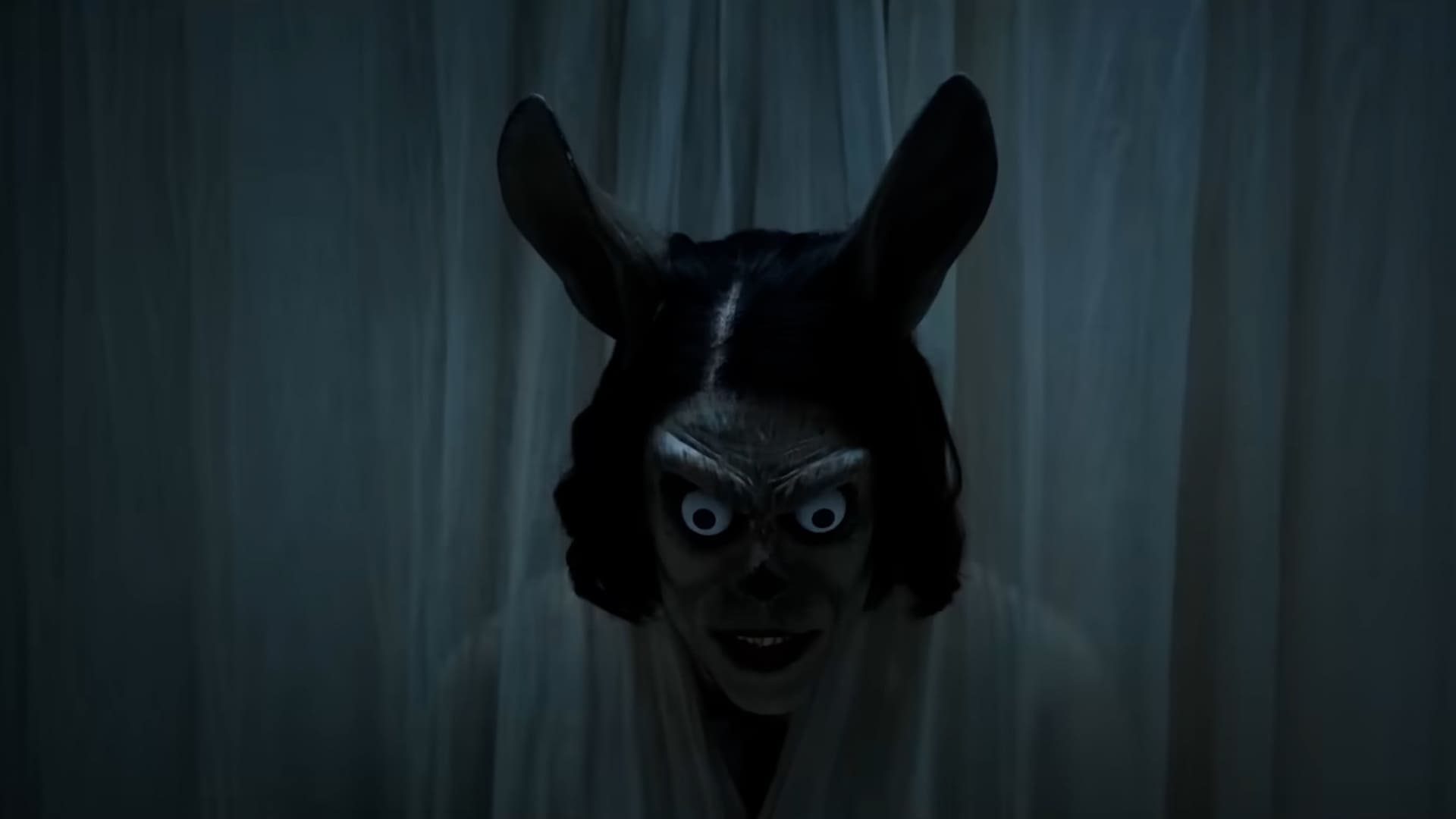
Psychological horror often becomes most unsettling when it begins with an ordinary act of grief, and Hokum embraces that idea from the very beginning. The film follows writer Ohm Bauman, played by Adam Scott, as he travels to a remote inn in Ireland to scatter his parents’ ashes. What starts as a quiet farewell quickly transforms into a disturbing experience filled with unsettling visions, local folklore, and growing paranoia. As mysterious events unfold around the isolated inn, Bauman is forced to confront not only supernatural possibilities but also the emotional burdens he has carried for years.
Rather than relying solely on jump scares, Hokum builds its tension through atmosphere and character development. Bauman is introduced as a man who has withdrawn from the people around him, using emotional distance to cope with past pain. As the story progresses, the audience gradually uncovers the reasons behind his isolation while watching him struggle with guilt, forgiveness, and the possibility of healing. This emotional journey gives the horror greater depth, allowing the psychological elements to become just as compelling as the supernatural mystery surrounding the haunted inn and its sinister reputation.
The film is directed by Irish filmmaker Damien Mc Carthy, whose storytelling draws heavily on Ireland’s rich tradition of myths, legends, and folklore. Filmed largely in West Cork, the production uses the region’s dramatic landscapes to create an atmosphere that feels both beautiful and deeply unsettling. Rather than serving as a simple backdrop, the remote countryside becomes an essential part of the narrative, amplifying the sense of isolation and uncertainty. Mc Carthy’s approach reflects a growing trend among contemporary Irish horror filmmakers, who blend local folklore with modern psychological storytelling to create distinctive and memorable films.
For Adam Scott, the experience of filming in West Cork proved just as memorable as the story itself. He has described the area as one of the most beautiful places he has ever visited, often spending his free time exploring the grounds surrounding his accommodation. That striking contrast between breathtaking scenery and creeping dread gives Hokum much of its unique identity. By combining authentic Irish locations, haunting folklore, and an emotionally driven central performance, the film offers more than a traditional ghost story. It becomes an exploration of grief, forgiveness, and the frightening ways unresolved emotions can transform even the most peaceful places into something deeply unsettling.
