
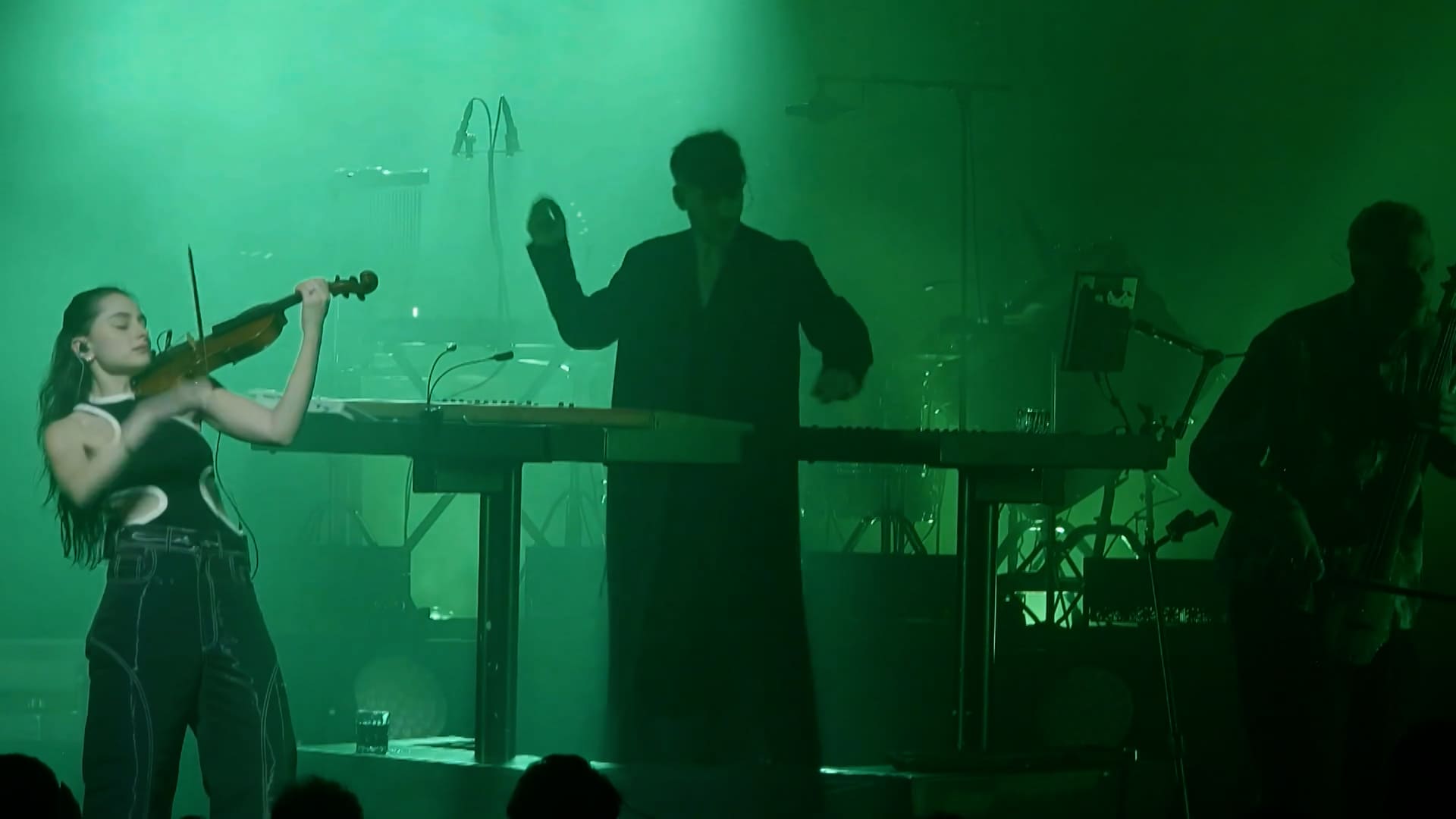
French composer Worakls has built a distinctive musical identity by bringing together two worlds that can seem far apart. His work combines classical composition with electronic production, often expanding beyond conventional dance performances through the use of live musicians and orchestras. Rather than seeing electronic music as a fixed genre, he treats technology as another tool for composition. That approach has helped his music move naturally between concert halls, electronic stages and cinematic settings. In 2024, it also brought him to one of cinema’s biggest events, the Cannes Film Festival.
For the festival’s opening ceremony, Worakls collaborated with French actor and ceremony host Camille Cottin on an unusual musical performance. He composed a soundtrack designed to accompany her opening speech, moving through jazz, electronic and orchestral influences. The idea was to create something different from a traditional festival introduction, with Cottin’s words and Worakls’ music functioning as parts of the same performance. For a composer whose work already has a cinematic quality, the prestigious Cannes stage offered a natural opportunity to connect music with storytelling.
Worakls, whose real name is Kevin Rodrigues, developed his musical foundation long before entering the electronic scene. Raised in a musical family, he began playing piano at just three years old and later received classical conservatory training. He also performed in rock bands before discovering electronic production. What fascinated him most was the freedom it offered. Electronic tools allowed him to create virtually any sound rather than being restricted by the traditional characteristics of a guitar, piano or other physical instrument.
That freedom continues to shape his artistic philosophy. Although Worakls is frequently associated with electronic music, he does not primarily consider himself a DJ. Instead, he identifies as a composer who uses computers alongside traditional instrumentation. For him, electronic production is less a genre than an evolution in how music can be created. Subtle electronic textures can add modern character to orchestral and melodic compositions without replacing their classical foundations. His live performances reinforce that idea by bringing acoustic musicians and contemporary production techniques together on the same stage.
The Cannes Film Festival appearance highlighted how naturally Worakls’ approach can connect with cinema. His ability to move between jazz, orchestral writing and electronic sound gives him a musical vocabulary suited to visual storytelling as well as live performance. Whether his future leads further into film scoring or continues across concert stages, Worakls has already demonstrated that musical categories do not need to define a composer. For him, technology provides freedom, while classical training provides the foundation, and the most interesting possibilities emerge when both are allowed to meet.
