
Christopher Nolan’s fascination with filmmaking began long before he became one of Hollywood’s most celebrated directors. As a child, he created home movies with a Super 8 camera and continued experimenting with amateur productions throughout college. Those early projects helped shape a career defined by ambitious storytelling, practical filmmaking, and narratives that challenge audiences while still delivering large-scale entertainment.
His first major breakthrough came with Memento in 2000. The psychological thriller unfolds through a reverse narrative structure, placing viewers inside the confused mind of a man unable to form new memories. Nolan designed the unusual format so audiences would experience the same uncertainty as the protagonist, receiving information only when he does. The result established the director’s signature interest in memory, identity, time, and subjective reality.
Nolan reached a much larger audience through his acclaimed Batman trilogy, consisting of Batman Begins, The Dark Knight, and The Dark Knight Rises. Rather than treating the characters as simple comic-book figures, he approached them with the same seriousness he would bring to a novel, play, or historical drama. The films grounded Batman’s world in recognizable emotions, moral conflicts, and political anxieties, helping redefine what superhero cinema could achieve. During this period, Nolan also explored rivalry and obsession in The Prestige, before taking audiences deep into the architecture of dreams with Inception. He had considered making a film about dreams for years but needed an emotional structure strong enough to make the imaginary world feel meaningful. Framing the concept as a heist movie gave the story urgency, rules, and characters viewers could care about.
In 2023, Nolan released Oppenheimer, a historical drama centered on physicist J. Robert Oppenheimer and the creation of the atomic bomb. The film earned Nolan his first Academy Awards for Best Director and Best Picture. Despite the recognition, he credited the production’s success to its remarkable ensemble. Cillian Murphy carried the film in the central role, while an extensive supporting cast brought depth to even the smallest characters. For Nolan, the spectacle came not only from science and history but from people attempting something seemingly impossible and confronting its consequences.
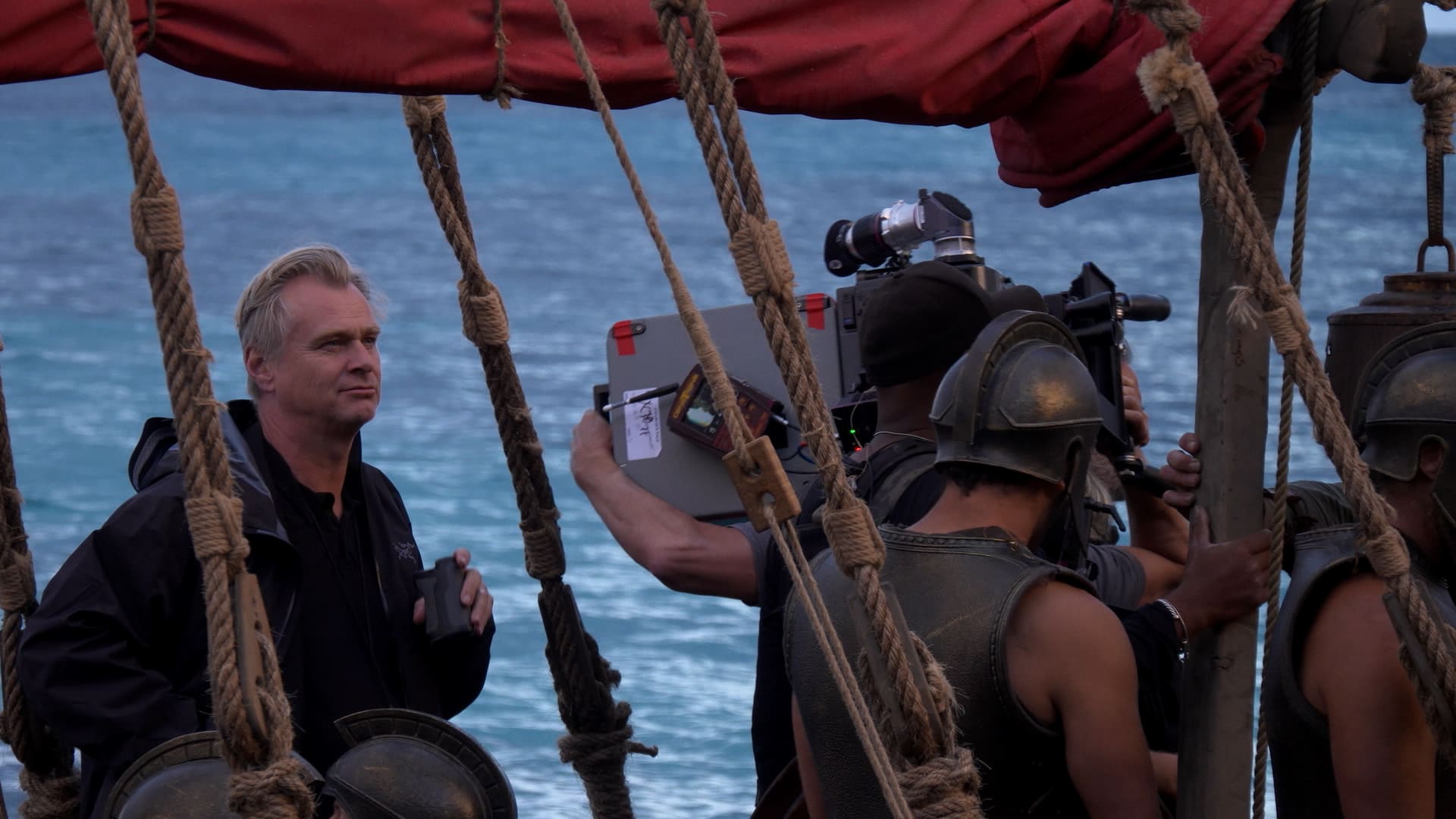
Nolan’s films have become major theatrical events because they are designed for communal viewing on the largest possible screen. His epic adaptation of The Odyssey continues that tradition, combining mythology, practical spectacle, and a prestigious cast. Although he is often credited with defending cinemas during the rise of streaming, Nolan believes theatrical moviegoing remains secure. The experience of gathering with strangers to laugh, cry, and become absorbed in a story on a massive screen continues to offer something that cannot be fully recreated at home.
