
A painting can disappear from the art world’s attention for generations and still return with an extraordinary story to tell. That is what happened to a small biblical scene connected to Rembrandt van Rijn, the Dutch master behind works including The Night Watch. After passing through centuries of changing ownership and attribution, the painting resurfaced and became the subject of renewed study. Its dramatic use of light offered important clues to its artistic significance. When Sotheby’s eventually brought the work to auction, its rediscovery turned into a multimillion dollar event.
According to Sotheby’s specialist George Gordon, records of the painting appear to stretch back to the early eighteenth century. It later disappeared from view before resurfacing in the Netherlands during the 1950s. At that point, prominent Dutch scholars published the work as a Rembrandt. Its status did not remain secure, however. A German art historian later rejected the attribution, reportedly after assessing the work from a photograph, and the painting subsequently faded from scholarly attention.
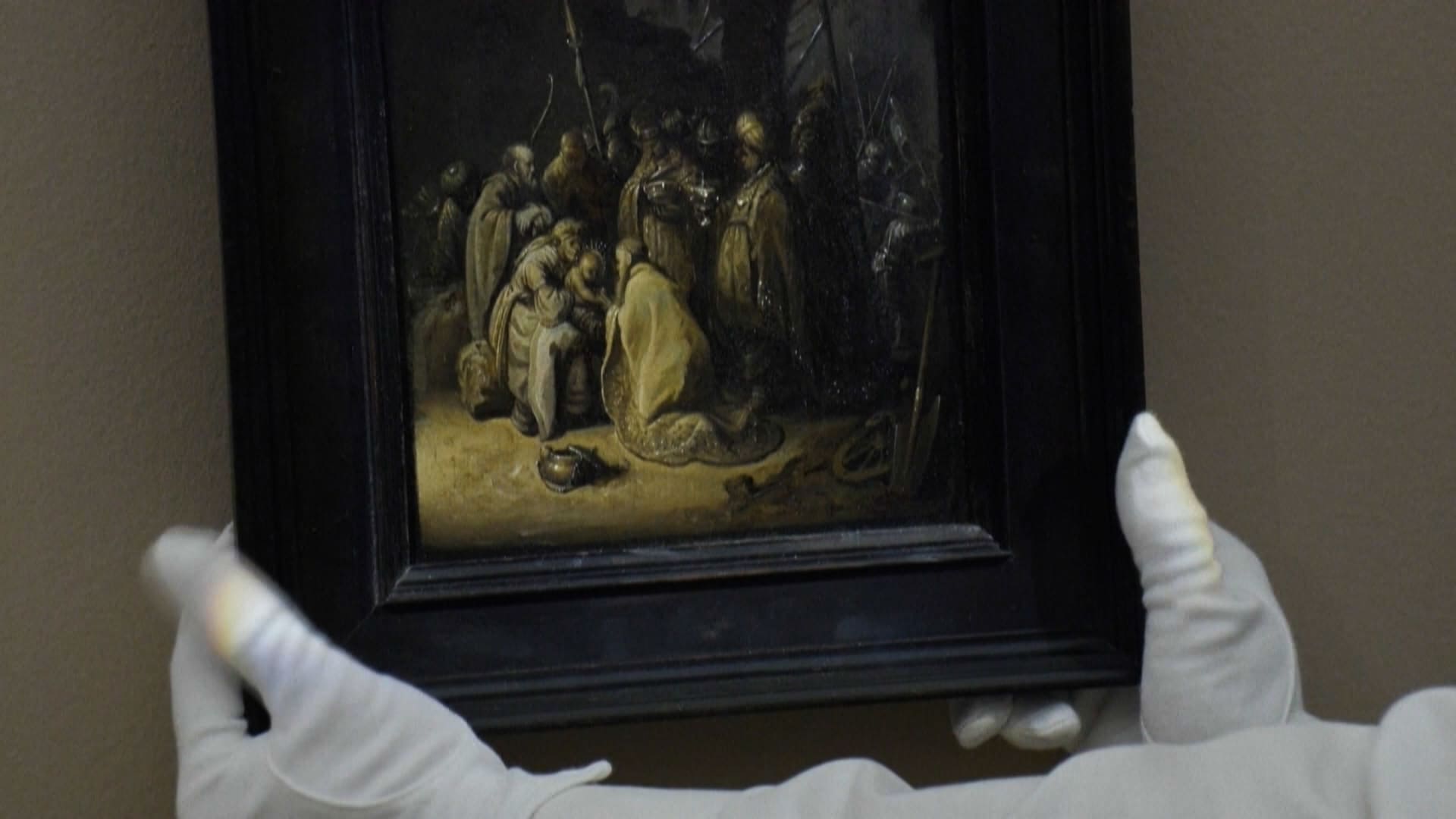
Its return offered specialists an opportunity to examine the work much more closely. One of the most intriguing elements was its sophisticated treatment of illumination. Rather than relying on a single source, the composition uses contrasting forms of light to direct attention through the scene and create atmosphere.
A warm glow rises from the lower left of the composition, apparently from a lantern. It illuminates figures in the foreground and reflects across nearby faces. A second, colder light enters the scene from another direction. Although it resembles moonlight, it represents the Star of Bethlehem, connecting the visual drama directly to the biblical subject.
This contrast between warm and cool illumination is especially important because Rembrandt was celebrated for his ability to use light and shadow to create emotion, depth and psychological intensity. Here, light does more than reveal the figures. It helps explain the narrative, separating the earthly glow of the lantern from the symbolic light associated with the religious story.
The painting’s relatively small dimensions did little to limit interest when it reached the auction room. Sotheby’s placed its estimate between $10 million and $15 million and secured a third party guarantee, providing confidence that the work would find a buyer. It ultimately sold for close to $14 million.
Such a price reflects more than the physical object itself. Attribution, provenance, rarity, condition and scholarly opinion can dramatically influence the value of an Old Master painting. When the artist involved is Rembrandt, opportunities to acquire a rediscovered work are particularly uncommon.
The painting’s journey demonstrates why art history is never completely settled. Works can vanish, attributions can change and new examination can revive questions thought to have been resolved decades earlier. In this case, a forgotten painting returned from obscurity to become a remarkable reminder that even centuries later, the work of an Old Master can still produce new discoveries.
