
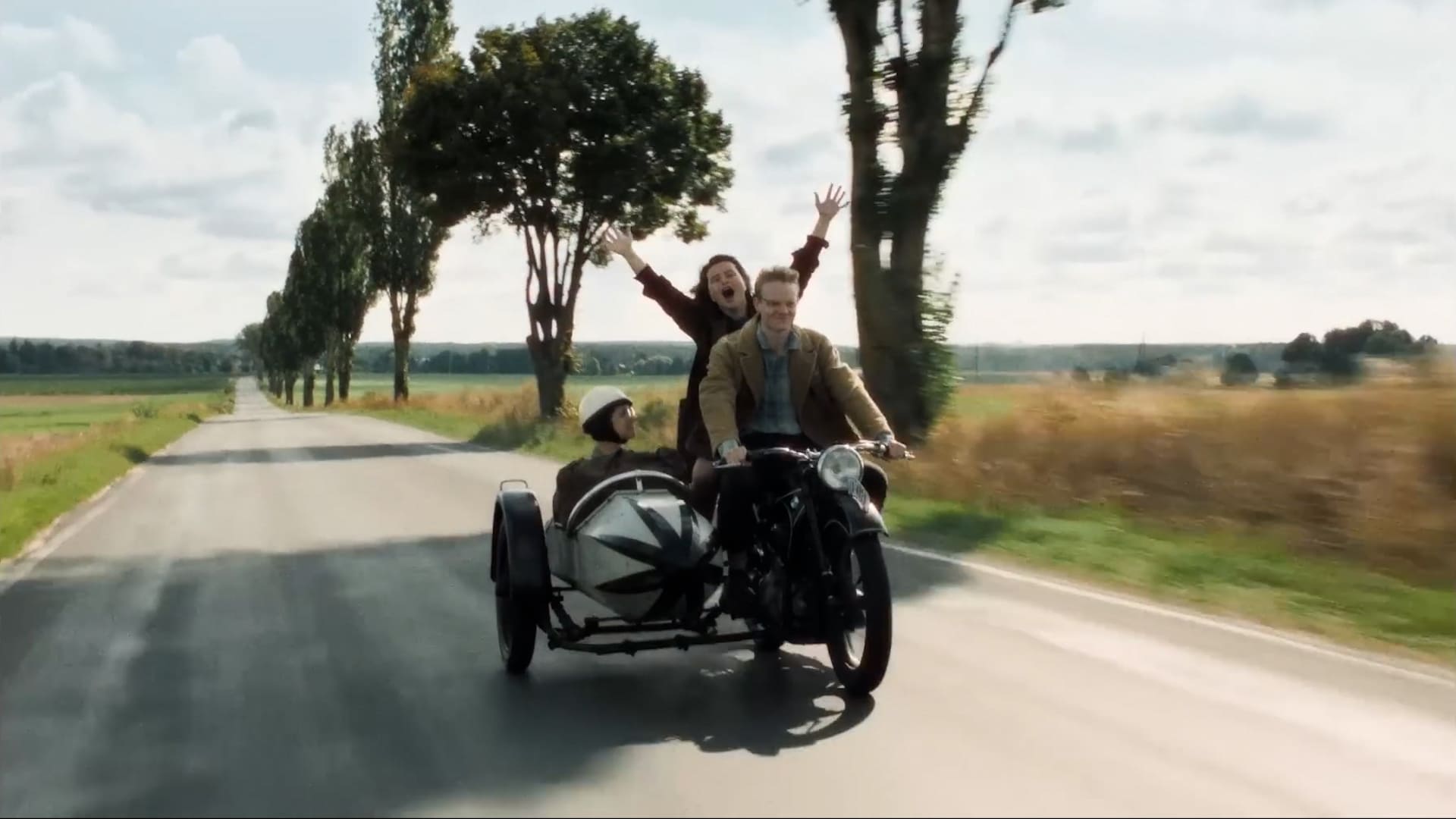
From Hilde, with Love approaches one of history’s darkest periods without relying on the visual language audiences often associate with World War II dramas. Directed by Andreas Dresen, the German film tells the true story of Hilde Coppi, a young woman who became involved with an anti-Nazi resistance network and was arrested while pregnant. Rather than presenting her world through exaggerated villains and familiar wartime imagery, Dresen wanted the film to feel immediate and human. His approach brings viewers close to both the resistance members and the people operating within the Nazi system. In doing so, the film asks an uncomfortable question about how ordinary people behave when confronted by an oppressive regime.
The historical Hilde Coppi and her husband, Hans Coppi, were associated with the resistance circles later collectively labeled the Red Orchestra by the Gestapo. Hilde was arrested in 1942 while pregnant and gave birth to her son, Hans, during her imprisonment. She was eventually executed at Plötzensee Prison in Berlin in 1943. Dresen’s film focuses not simply on resistance as an act of heroic defiance, but on Hilde as a person experiencing love, friendship, motherhood, fear and imprisonment. This intimate perspective allows the political horror surrounding her to emerge through everyday experiences rather than constant spectacle.
That philosophy also shaped Dresen’s portrayal of the Nazis. He deliberately rejected familiar cinematic clichés, including sepia-toned imagery, polished boots and aggressively theatrical villains. Dresen explained that such imagery can unintentionally make the period appear stylish, something he strongly wanted to avoid. Instead, authority figures can appear calm, polite and even seemingly sympathetic. The effect is deeply unsettling because their friendliness does nothing to change the brutality of the system they serve. A judge may speak gently to Hilde, but the machinery surrounding that conversation can still lead to a death sentence.
This restrained treatment gives From Hilde, with Love much of its moral complexity. Evil does not always announce itself through shouting, threatening gestures or obviously monstrous personalities. A destructive political system can also function through ordinary offices, procedures and individuals who behave politely while participating in terrible outcomes. By removing the comforting distance created by stereotypical villains, Dresen encourages viewers to examine the choices made by everyone involved. Resistance fighters become recognizable human beings rather than flawless heroes, while those supporting the regime cannot simply be dismissed as characters belonging to an unreal world.
Ultimately, Dresen wants the story of Hilde Coppi to speak beyond its historical setting. If every hero is automatically fearless and every villain instantly recognizable, audiences can easily reassure themselves that they would have chosen the right side. From Hilde, with Love refuses to make that judgment so simple. Its quieter portrayal asks viewers to consider how courage, conformity and responsibility can appear in ordinary life, and what choices they might make under pressure. By connecting history with questions that remain relevant in the present, the film transforms Hilde’s story from a distant wartime tragedy into a challenging reflection on individual responsibility.
