
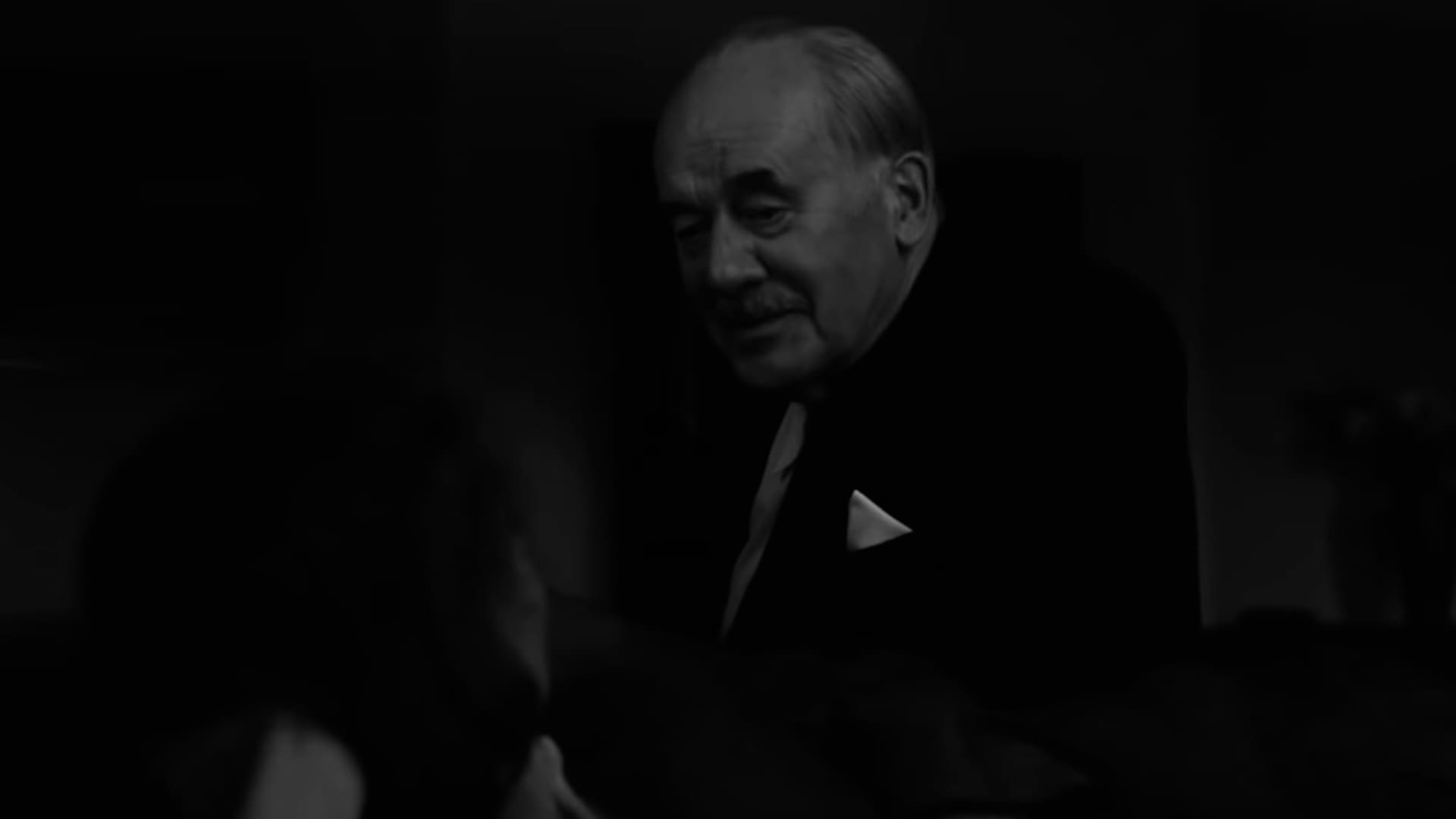
Two fiercely independent personalities, one car and a journey through a country recovering from war create the unusual foundation of Fatherland. The darkly comic film brings German writer Thomas Mann and his daughter Erika Mann together for a road trip through postwar Germany. Rather than presenting their lives as a conventional biography, the story uses their complicated relationship to explore family, exile and the difficulty of returning home. Sandra Hüller plays Erika, while Hanns Zischler takes on the role of her Nobel Prize winning father. Their journey places two strong minded people in circumstances that constantly challenge their beliefs and each other.
The story is set in the summer of 1949, when Thomas and Erika return to Germany after years spent away from the country. Thomas Mann had become one of Germany’s most celebrated literary figures, winning the Nobel Prize in Literature in 1929, but the rise of the Nazis forced him and members of his family into exile. Returning after the Second World War therefore carried emotional and political significance far beyond an ordinary visit.
Erika was an extraordinary figure in her own right. An actress, writer and political activist, she had built a life defined by independence and resistance to convention. In Fatherland, that strong personality becomes an important counterweight to her father’s equally formidable character. Putting them together inside a Buick creates the ingredients of a road movie, but their destination matters less than the conversations and confrontations that develop along the way.
Hüller emphasizes that the film should not be understood as a straightforward biographical portrait. Instead, it takes inspiration from the relationship between father and daughter and uses fictional storytelling to examine themes that extend beyond the Mann family. Their disagreements become a way of exploring generational tensions, personal loyalty and what happens when two people who care about each other refuse to surrender their independence.
Zischler’s Thomas faces another difficult question. By this stage of his career, the acclaimed writer did not need Germany to establish his reputation. Returning meant confronting a country that had embraced a political system he strongly opposed and from which he had been forced to distance himself. The journey therefore becomes as much an argument with the idea of Germany as it is a physical trip through the country.
That tension gives Fatherland its distinctive mixture of history and dark comedy. Thomas and Erika are not presented simply as famous names from the past, but as two difficult, intelligent people trapped together long enough to challenge each other’s assumptions.
By transforming a historically significant homecoming into an intimate road story, Fatherland finds something universal inside a remarkable family relationship. It suggests that returning home can be complicated, especially when both the place and the people have been permanently changed by what came before.
