
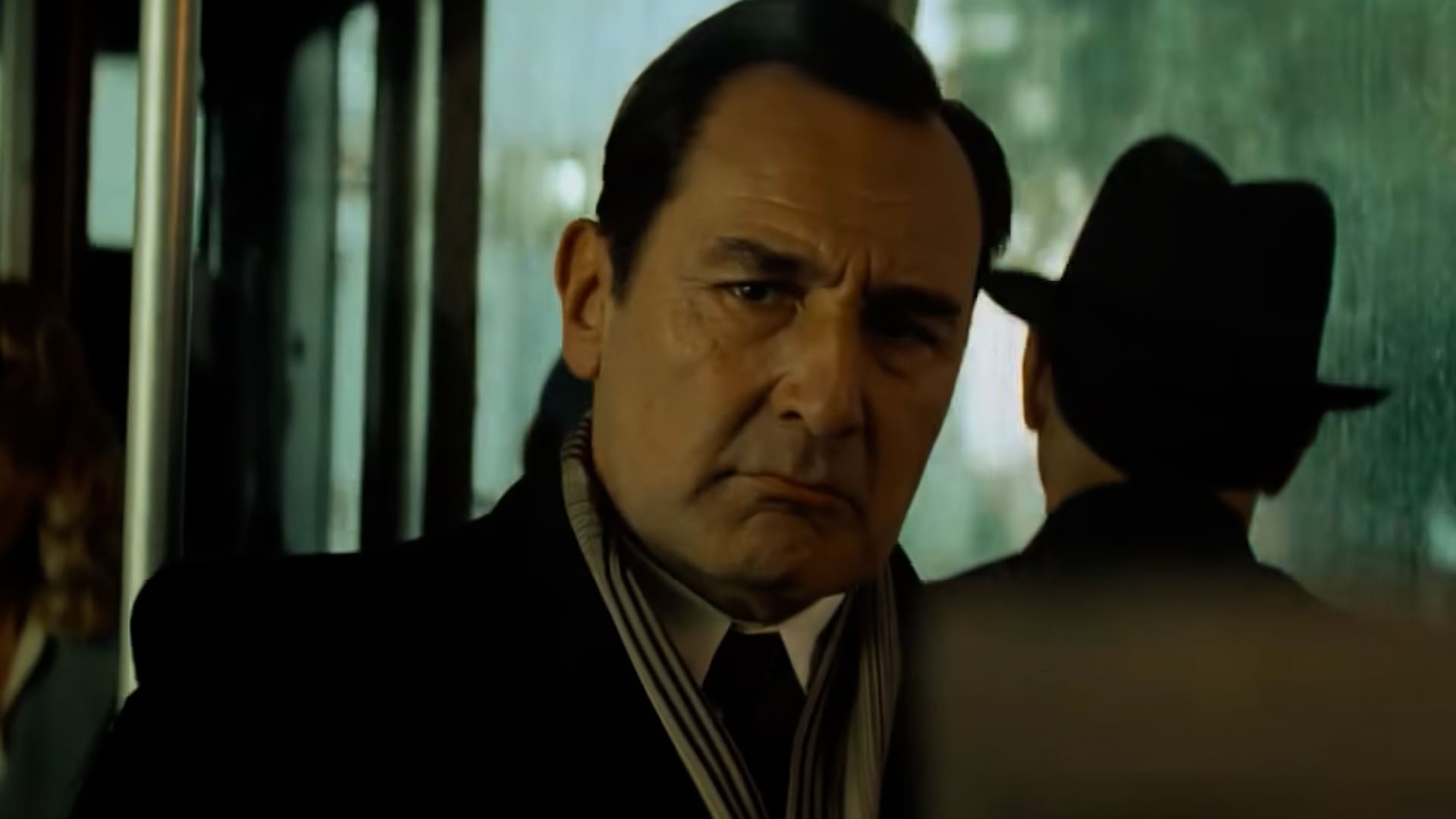
Jean Moulin became one of the defining figures of the French Resistance during World War II, but Moulin does not attempt to tell his entire life story. Instead, Hungarian filmmaker László Nemes focuses on a narrow and dangerous period near the end of Moulin’s life. The director, known for Son of Saul, approaches the historical figure through the tension of a thriller rather than the structure of a conventional biographical drama. By concentrating on roughly the final ten days before Moulin’s capture, the film explores resistance, responsibility and the fragile nature of freedom.
Moulin played a crucial role in bringing together different French Resistance movements during the Nazi occupation. Working on behalf of Charles de Gaulle, he helped coordinate groups that had previously operated with different priorities and leadership. His activities made him a major target for the Gestapo. Moulin was arrested near Lyon in June 1943 and brutally interrogated. He died shortly afterward without revealing the Resistance secrets his captors sought.
Nemes admits that he did not initially know Moulin’s story in great detail. That unfamiliarity became part of the filmmaking challenge, particularly because historical documentation surrounding Moulin’s final activities is incomplete. Rather than filling every gap with certainty, the director saw room for carefully considered fiction. For Nemes, the responsibility was to respect the historical importance of Moulin while creating a dramatic story around events that cannot always be reconstructed precisely.
That approach also explains why Nemes resisted making a traditional biopic. The film deliberately limits its canvas, concentrating on a short period when danger was closing in around its central character. Such a restricted timeline allows the story to focus on pressure, secrecy and uncertainty. Audiences know the historical outcome, but the tension comes from watching how Moulin continues his work while facing an increasingly threatening environment.
Although the story belongs to World War II, Nemes sees its themes as relevant beyond that period. Growing up with the historical legacy of totalitarianism in Eastern Europe influenced his interest in the ease with which societies can take freedom for granted. He views the struggle against oppression not simply as a historical subject, but as part of a recurring human conflict between liberty and authoritarian power.
Moulin therefore uses one man’s final days to examine a much larger question. What does resistance demand when personal safety is no longer guaranteed? Jean Moulin’s legacy rests not only on the organizations he helped unite, but also on his refusal to surrender the principles behind them. By narrowing its focus instead of attempting to cover everything, Moulin aims to make that courage immediate, tense and deeply human.
