
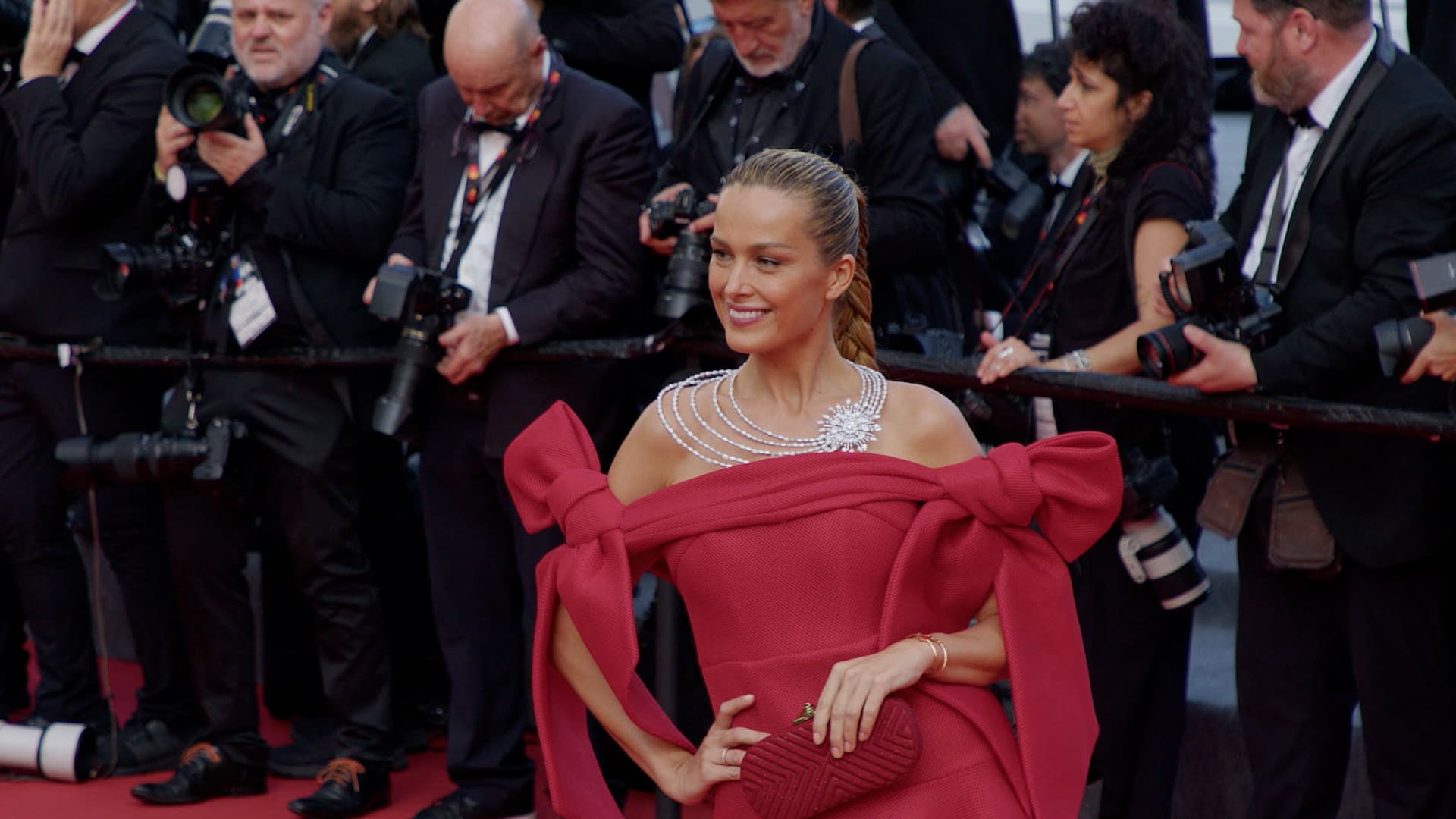
Petra Němcová knows the glamour of the Cannes Film Festival well, but her connection to the event goes beyond gowns, jewelry and photographers. The Czech model and philanthropist has made numerous appearances at the festival, becoming a familiar presence on its famous red carpet. Her relationship with luxury jewelry house Chopard has also placed her at some of Cannes’ most glittering celebrations. Yet when Němcová speaks about the festival, she often focuses on something less tangible than fashion. For her, Cannes can also provide a platform for stories and voices that might otherwise struggle to receive international attention.
Němcová shared that perspective while attending a Chopard event celebrating the maison’s Miracles Red Carpet Collection. Surrounded by elaborate jewelry, she reflected on why returning to Cannes remained meaningful. She highlighted the ability of art and cinema to draw attention to people experiencing hardship and to bring different perspectives before a global audience. It was a thoughtful contrast to the luxurious surroundings of one of the film industry’s most photographed gatherings.
That outlook connects naturally with Němcová’s life away from modeling. After surviving the devastating 2004 Indian Ocean tsunami while vacationing in Thailand, she became deeply involved in humanitarian work. The disaster killed her partner, photographer Simon Atlee, and left Němcová seriously injured. She later helped establish a nonprofit organization focused on supporting communities affected by natural disasters, turning an intensely personal tragedy into years of humanitarian advocacy.
Her experiences also give particular weight to her interpretation of the word “miracle.” Asked what the idea meant to her, Němcová did not point to extraordinary wealth or spectacular events. Instead, she described everyday existence itself as miraculous. Every breath, moment, person, animal and tree represented something worth appreciating. Being alive, she explained, was itself a miracle.
It is a perspective that gives an event like Cannes an interesting dual meaning. On one level, the festival is built around cinema, premieres, couture fashion and international celebrity. On another, films can introduce audiences to unfamiliar lives, cultures and experiences. For Němcová, those possibilities appear to matter as much as the spectacle surrounding them.
The dresses and gemstones will inevitably change with every Cannes season, and new stars will arrive on the red carpet. Němcová’s reflections offer a reminder that the most memorable moments do not always come from what someone is wearing. Sometimes the lasting impression comes from using a glamorous platform to talk about gratitude, compassion and the value of simply being alive.
