
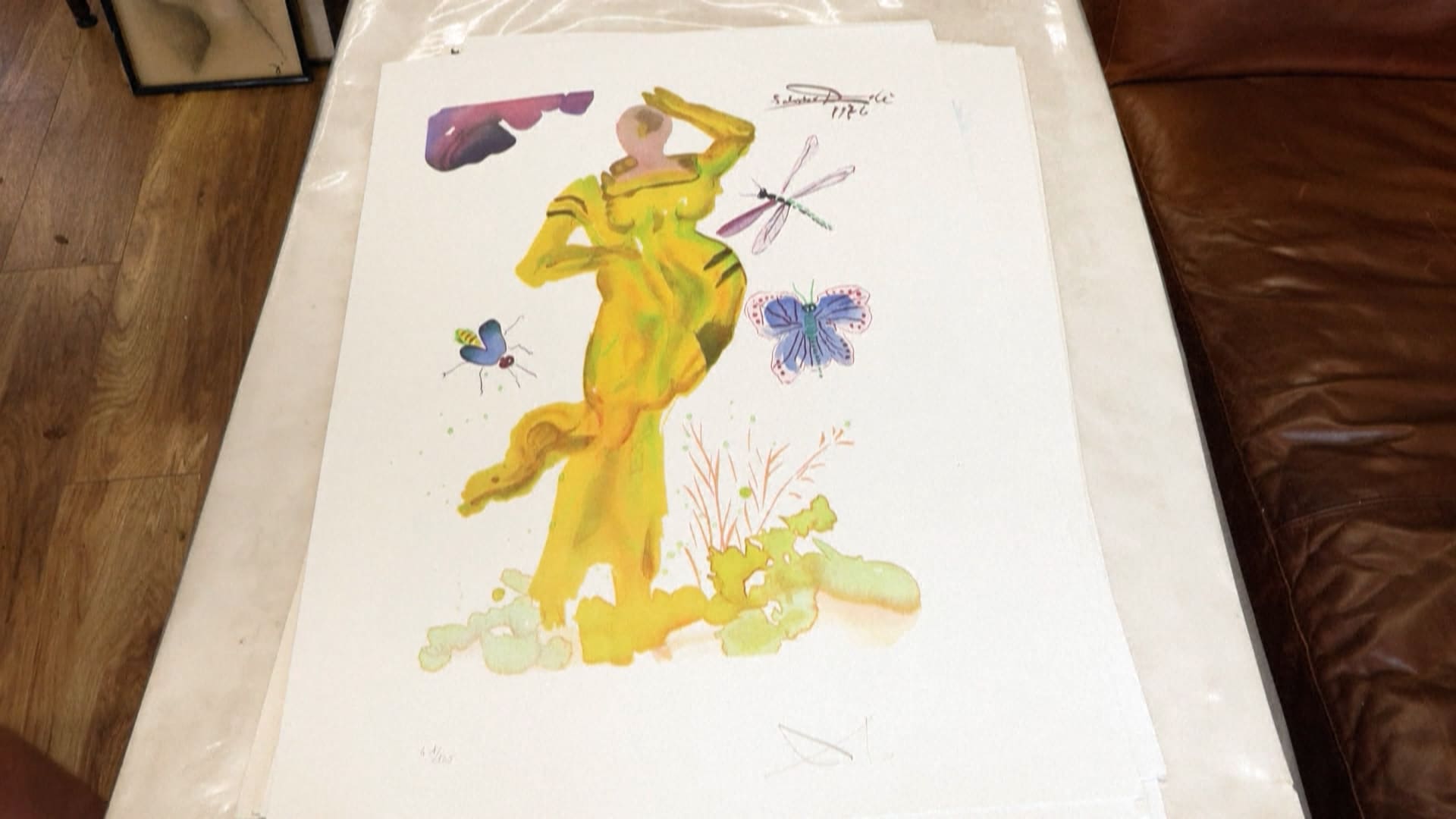
Imagine clearing out a garage and discovering a collection connected to one of the most recognizable artists of the 20th century. That is exactly the kind of surprise that brought a group of Salvador Dalí prints back into the spotlight. The Spanish Surrealist remains famous for dreamlike imagery, melting clocks and an unmistakably theatrical personality. Original works associated with major artists can command enormous sums, placing them far beyond the reach of most collectors. Prints, however, can provide a more accessible route into the market.
The collection had reportedly spent decades safely stored in a garage in Mayfair, central London. According to the auctioneer involved, the owner originally acquired the works when a gallery was closing in the early 1980s, paying roughly £600 to £700 for the group. Years later, they resurfaced while the owner was clearing stored possessions. What might easily have remained forgotten among household items suddenly became an intriguing auction discovery.
Part of their appeal came from their striking colors and their connection to Dalí himself. The prints offered the eccentric visual language that helped make the artist internationally famous, and the auctioneer said individual examples carried the artist’s signature. At auction, demand proved strong. Some reportedly approached £5,000, while even less expensive examples sold for hundreds of pounds. The results demonstrated how works on paper can attract collectors even when they sit far below the prices associated with unique paintings.
Dalí’s extensive involvement with printmaking has created a particularly interesting market. Prints can exist in editions, meaning multiple impressions of a work may be available rather than a single original painting. Their value can vary significantly depending on factors including edition size, condition, provenance, printing method and authentication. A signature alone does not automatically establish authenticity or value, making careful research particularly important for anyone considering a purchase.
Online auctions have also changed who can participate. The auctioneer noted that sales once depended heavily on professional dealers who bought works before reselling them. Digital listings now allow private collectors to discover pieces directly, including younger buyers who may never have attended a traditional auction. One buyer reportedly purchased several of the rediscovered prints simply because she wanted to display them at home.
That may be the most interesting part of the story. Art collecting does not always have to mean pursuing museum level masterpieces worth millions. For some buyers, a signed print can offer a more attainable connection to an artist they admire. After decades hidden away in storage, these Dalí works found their way back into view, and onto the walls of a new generation of collectors.
